
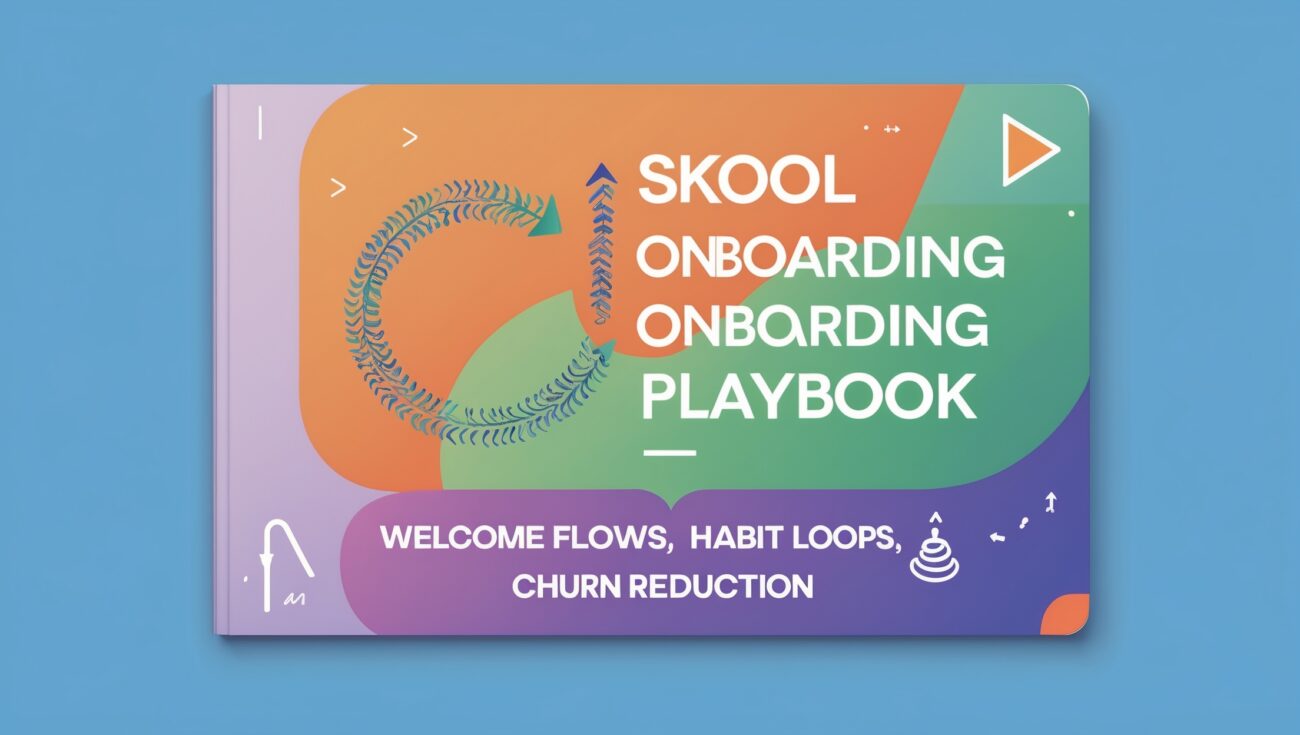
Skool Onboarding Playbook: Welcome Flows, Habit Loops & Churn Reduction
Launching a Skool community is exciting — but keeping members engaged long-term requires strategy. The first impression, the first few clicks, and the first few days determine whether a new member becomes a loyal fan or disappears after a week.
That’s where a Skool onboarding playbook comes in.
In this post, I’ll share exactly how to design welcome flows, build habit loops, and implement churn-reduction strategies that make your Skool community magnetic and self-sustaining.
If you haven’t started your community yet, you can sign up here Join Skool.
Table of Contents
Why Onboarding Matters More Than Anything
Your onboarding process determines retention, engagement, and revenue. Period.
Even the best community or course will fail if new members feel lost when they join. Inside Skool, members often come in curious — they’ve clicked your link, joined your offer, and expect something exciting.
But what happens next decides everything:
- Do they know where to start?
- Do they get a clear win within the first 24 hours?
- Do they feel part of something bigger?
An effective onboarding system makes every new member feel confident, connected, and curious to log back in.
The 3 Stages of Effective Skool Onboarding
A complete Skool onboarding experience can be divided into three clear stages:
1. The Welcome Flow (First 24 Hours)
This is your “handshake” moment. You want your new members to feel guided.
Key elements:
- Welcome post: Create a pinned post titled “Start Here ” with a short welcome video (1-2 minutes).
- Clear call-to-action: Ask them to comment with where they’re from or their biggest goal — this creates instant engagement.
- Link to intro course: Direct them to the first lesson in your classroom that delivers quick value.
In this stage, you’re building trust and clarity.

When I first started building communities, I quickly learned that Skool community onboarding best practices are not optional — they are the difference between a thriving group and one that slowly dies. Most creators focus on marketing and forget what happens after someone pays. But onboarding is where trust is built, expectations are set, and long-term retention begins. If members don’t understand what to do in the first few minutes, they mentally disconnect almost immediately.
One of the biggest mistakes I see is creators assuming people will “figure it out.” They won’t. That’s why strong Skool community onboarding best practices always start with clarity. A simple “Start Here” post, a short welcome video, and a clear first action can dramatically increase engagement. When members know exactly where to click and what to do, they feel confident instead of overwhelmed.
Before I understood onboarding, I kept seeing members disappear. That’s when I learned the meaning of churn. Many people ask, what does churned mean on Skool? In simple terms, a churned member is someone who joins your community and then leaves or cancels their subscription. High churn usually means onboarding failed, not that your content was bad.
What surprised me was realizing that churn often happens within the first seven days. That’s why Skool community onboarding best practices focus heavily on the first experience. If members don’t feel progress, connection, or momentum early on, they quietly disengage. Skool makes this easier to fix because everything — posts, classroom, and calendar — lives in one place.
Another key part of onboarding is helping members experience a “quick win.” When people ask what does churned mean on Skool, the deeper answer is emotional. Churn happens when someone feels stuck, confused, or unseen. A quick win — even something small — reassures them they made the right decision by joining your community.
I personally use onboarding checklists because they work incredibly well. One of the strongest Skool community onboarding best practices is giving members a short list of actions: introduce themselves, watch one video, comment on one post, and attend the next call. Each completed action builds momentum and increases the chance they stay.
Skool’s design actually supports this perfectly. The clean layout reduces distractions, and pinned posts keep onboarding visible. That’s one reason I recommend Skool over other platforms. If you want to build a community that retains members instead of losing them to churn, you can start here:
SIGNUP HERE IN SKOOL
Another reason people churn is lack of human connection. Even with great content, members leave if they feel invisible. Strong Skool community onboarding best practices include personal welcome messages or tagged introductions. When someone feels seen on day one, their likelihood of canceling drops dramatically.
So again, what does churned mean on Skool? It doesn’t just mean someone left — it means there was a breakdown somewhere in the experience. Most of the time, that breakdown happens before the member even consumes the main content. Onboarding is where you prevent that.
I’ve also learned that onboarding should explain how to use Skool, not just what the community offers. New members may not understand the classroom, the calendar, or the gamification system. One of the smartest Skool community onboarding best practices is a short walkthrough that shows members how to navigate everything confidently.
Gamification plays a huge role in reducing churn. When members earn points and level up early, they feel progress. That’s why Skool communities with strong onboarding have much lower churn rates. They turn engagement into a game, and people naturally want to keep playing.
If you’re seeing people leave and wondering what does churned mean on Skool, don’t blame yourself — just fix the onboarding. Most churn issues are solvable with clearer direction, stronger welcome flows, and better early engagement. Skool gives you the tools; you just need to use them intentionally.
One thing I always remind creators is that onboarding is not a one-time task. You should refine it constantly. As your community grows, your Skool community onboarding best practices should evolve too. Pay attention to where members get stuck, where they drop off, and what questions they keep asking.
That’s exactly why I chose Skool as my main platform. It makes it easier to spot churn patterns and fix them fast. If you’re serious about building a community that people stay in — not just join — Skool is the best place to do it. You can create your community here:
SIGNUP HERE IN SKOOL
Finally, reducing churn isn’t about adding more content. It’s about creating a better first experience. Once I mastered Skool community onboarding best practices, everything changed — engagement went up, cancellations went down, and the community felt alive. If you’re building or planning a Skool group, onboarding is the lever you should focus on first.

2. The Habit Loop (Days 2-7)
This is where you make logging in a habit.
Inside Skool, daily engagement comes from triggers and rewards — classic psychology known as habit loops.
A strong habit loop looks like this:
Trigger → Action → Reward → Investment
Example:
- Trigger: Daily post in your announcements.
- Action: Member clicks and comments.
- Reward: Dopamine hit from likes, replies, and recognition.
- Investment: They share their own insights, feeling part of the group.
3. The Retention Loop (After Week 1)
Retention begins once members feel identity alignment. They start saying, “I belong here.”
Keep your long-term members engaged through:
- Weekly challenges
- Exclusive Q&A calls
- Badges or roles for milestones
- A private leaderboard or spotlight system
Your onboarding flow feeds this retention cycle — which ultimately reduces churn.
Designing the Perfect Skool Welcome Flow
Let’s break down how to craft your welcome flow step-by-step.
Step 1: Pre-frame With a Warm Email
Before a user even enters Skool, send them a “Welcome to the Community” email.
It should:
- Reinforce what they just joined
- Tell them what to expect next
- Provide a direct link to Skool
Example email:
“Hey [Name], welcome aboard!
I’m excited to have you inside our Skool community.
Your next step: click below to introduce yourself and unlock your first lesson.
Join Skool Now”
Step 2: Create a “Start Here” Classroom
Skool’s Classroom feature lets you structure your content like a mini-course.
Your first module should include:
- A welcome video (1-2 minutes) introducing yourself
- A community tour explaining where everything is
- A quick win video (teaching one small, high-value thing fast)
Give them that “aha” moment right away.

Step 3: Use a Community Post to Spark Interaction
Make a pinned post titled “Introduce Yourself!”
Ask three things:
- Where are you from?
- What’s your main goal?
- What are you hoping to learn or achieve here?
This post should already have comments from you and your moderators. When new members see activity, it triggers the social proof effect — they feel it’s a lively, real space.
Step 4: Set Up Automated Reminders
Use email or a pinned post to remind them to complete steps.
Example reminders:
- “Did you introduce yourself yet?”
- “Don’t miss today’s mini-lesson — it’s just 5 minutes!”
Each micro-action strengthens engagement.
Building Habit Loops That Stick
Now that they’ve been welcomed, you want members to come back daily.
Skool makes this easy because engagement notifications (likes, replies, tags) act as built-in triggers. But you can amplify that through intentional design.
1. Daily or Weekly Ritual Posts
Create rhythm.
Example schedule:
- Monday: Motivation or Goal Post
- Wednesday: Progress Check-in
- Friday: Wins and Reflections
Consistency forms the foundation of a habit loop.
2. Gamify the Engagement
Inside Skool, members can earn points for commenting, posting, and completing courses.
Leverage this by offering small rewards:
- Unlock a private module at Level 3
- Win a free 15-minute call for being in the top 3 each month
- Highlight a “Member of the Week” in your weekly email
Gamification is the bridge between fun and consistency.
3. Create Triggers With Notifications
Tag new members in early posts, use polls, and respond personally. Every notification brings them back to the platform — creating micro-engagement cycles.
The more you tag strategically, the more you teach Skool’s algorithm what kind of engagement matters.
Reducing Churn Before It Starts
Let’s talk about churn reduction — keeping people from leaving after the first month.
1. Track Early Inactivity
If a member doesn’t engage in the first 3-5 days, that’s a red flag.
Send a personal message:
“Hey [Name], I noticed you haven’t checked in yet. Everything okay? You can start with the first video here — it’s a quick win.”
That human touch can recover 20-30% of members who might’ve left.
2. Create a Progress Journey
People stay when they can see progress.
Add visible milestones like:
- Level 1: Beginner
- Level 2: Contributor
- Level 3: Leader
Use Skool’s built-in points system and encourage them to post screenshots when they level up.
3. Celebrate Wins Publicly
Public recognition fuels belonging.
Create a post every Friday celebrating top contributors.
That sense of community validation is a powerful churn-reducer.
Automating Your Onboarding Without Losing the Human Touch
Automation doesn’t mean robotic. You can systemize onboarding while keeping it personal.
Here’s how:
Step 1: Automate the Workflow
Use a simple email automation tool (like ConvertKit or Zapier) that triggers a welcome email once someone joins your Skool.
It can include:
- Welcome video link
- Step 1 instructions
- Invitation to your intro post
Step 2: Pre-schedule Posts in Skool
Even though Skool doesn’t currently have full automation, you can batch-create posts and pin them on a schedule.
Every post should lead to engagement:
- Ask questions
- Request replies
- Offer quick feedback
Step 3: Track Analytics
Skool’s dashboard shows engagement and member activity.
Use it weekly to identify drop-offs — if people stop engaging after lesson 3, that’s your signal to improve that step.
Psychology of Retention: Why People Stay in Communities
Retention isn’t about more content. It’s about emotional connection and habitual interaction.
1. Belonging Beats Information
People can find information anywhere. But feeling understood and valued is rare.
Your onboarding should make them feel seen.
Personal responses, tailored feedback, and tagging members by name all matter.
2. Micro-Wins Beat Big Wins
Small wins keep dopamine flowing.
Give them something they can achieve today — like posting an intro, answering a poll, or completing a quick video.
3. Storytelling Keeps People Hooked
Share your own journey — how you started, what you struggled with, what the community has done for others.
Stories create relatability loops — they turn passive members into participants.
Common Onboarding Mistakes to Avoid
Even experienced creators make these mistakes when building their Skool communities:
- Too much content upfront – overwhelm kills excitement.
- No clear call-to-action – members don’t know what to do next.
- No early engagement – silence in the feed equals “dead community” perception.
- Ignoring the first week – this is when 80% of churn happens.
- Over-automation – no personal touch means no connection.
Fix these and your retention rate can easily double.
Example: My Skool Onboarding Template
Here’s a simple structure you can copy:
| Day | Step | Action | Goal |
|---|---|---|---|
| 1 | Welcome Email | Send “Start Here” + Skool link | Set direction |
| 1 | “Introduce Yourself” Post | Ask 3 personal questions | Build social proof |
| 2 | Quick Win Lesson | Teach one high-impact concept | Create instant value |
| 3 | Progress Check-in | Ask for updates | Reinforce habit |
| 5 | Mini Challenge | Invite engagement | Build momentum |
| 7 | Celebrate Wins | Highlight contributors | Strengthen community bond |
Consistency in these 7 days = retention.
The Role of Your Classroom
The Skool Classroom is the perfect environment to blend learning and community.
Structure it to move users through transformation rather than just watching videos.
Best practices:
- Each lesson ends with a micro-action (“Post your results in the community”).
- Keep lessons short (under 10 minutes).
- Use checklists — completion psychology motivates users to continue.
Skool vs Traditional Onboarding Systems
Why build onboarding inside Skool instead of using external tools like Slack or Kajabi?
Because Skool merges:
- Community (forum)
- Courses (classroom)
- Gamification (points/levels)
This all-in-one setup means your onboarding experience is seamless — no switching tabs or losing engagement to email threads.
And with the affiliate opportunity, you can even earn by referring new creators. If you haven’t joined yet, start here:
Sign up for Skool
Testing and Iterating Your Onboarding Flow
No system is perfect on day one.
Keep these iteration tips in mind:
- Use a small batch of members to test your flow before scaling.
- Record where members drop off (via Skool analytics).
- Ask feedback questions: “What was confusing or unclear?”
- Adjust every 30 days for improvement.
Continuous iteration = continuous retention growth.
Final Thoughts: Your Skool Community Is a Living Ecosystem
Think of onboarding not as a one-time setup, but as an evolving experience.
Every member is on a different journey — your job is to meet them where they are.
With a thoughtful welcome flow, well-designed habit loops, and proactive churn prevention, you can turn first-time visitors into lifelong members.
And if you’re ready to build a thriving, automated, and truly human community — start your journey here:


ремонт проточного водонагревателя [url=remont-boyler-na-domu.ru]https://remont-boyler-na-domu.ru/[/url]
мастер по бойлерам [url=https://moskva-boyler-remont.ru/]ремонт водонагревателя[/url]
сервисный центр hp москва кочновский проезд [url=https://hp-servis-msk.ru/]ремонт hp[/url]
ремонт hp войковская [url=servis-hp-moskva.ru]https://servis-hp-moskva.ru/[/url]