
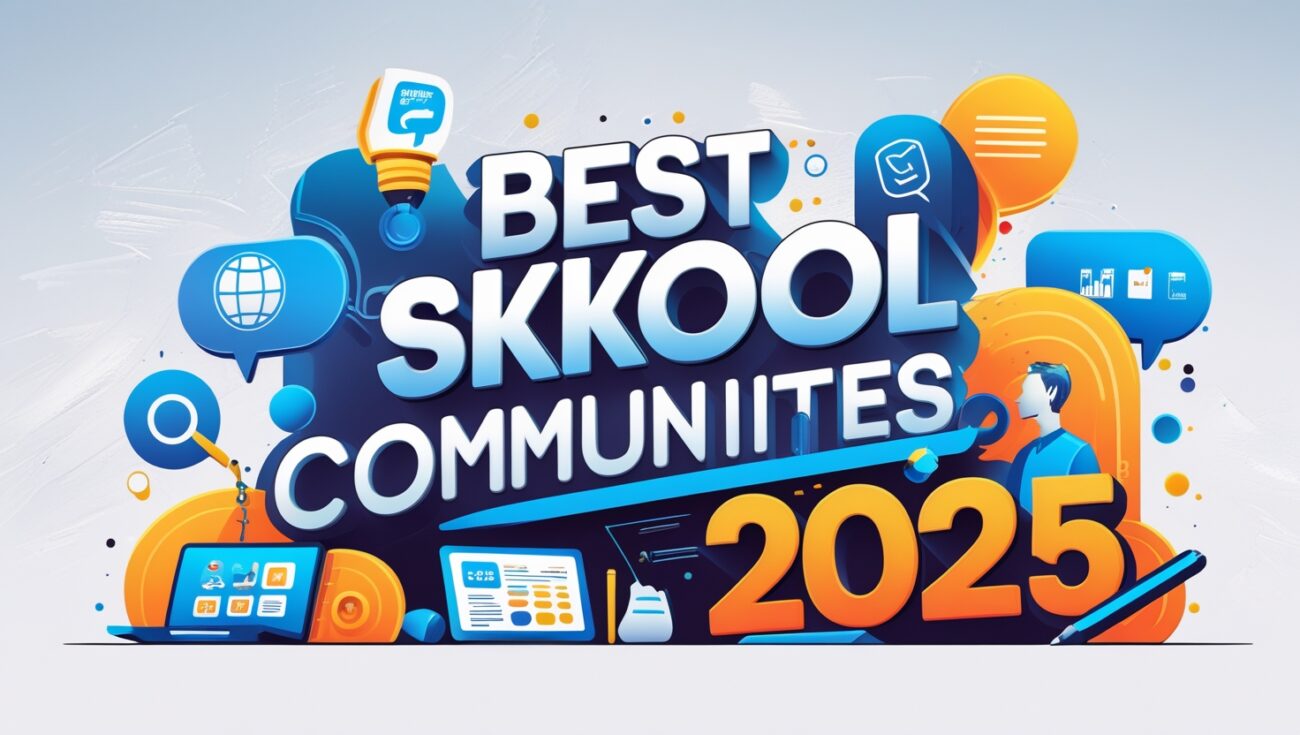
Best Skool Communities to Join in 2025 (Entrepreneur Picks)
One of the things I love most about Skool — beyond how simple it is to use — is the quality of the communities you can find there. Unlike Facebook or Discord, where groups feel chaotic or distracting, Skool is clean, focused, and full of high-level entrepreneurs and creators building real things.
I’ve joined several Skool communities over the past year that have helped me grow faster, think bigger, and connect with people who actually care about results. So in this post, I’m sharing the best Skool communities to join in 2025, especially if you’re an entrepreneur, course creator, coach, or marketer looking to grow in a distraction-free environment.
If you’re thinking of starting your own Skool group after seeing what these groups offer, here’s my personal referral link to try it:
Click here to start your own Skool community
Table of Contents
1. The Game by Sam Ovens
If you’ve spent any time in the online business world, you’ve probably heard of Sam Ovens. His Skool group, The Game, is one of the most well-known and most active communities on the platform.
Inside, he shares insights on mindset, business strategy, client success, and the evolution of online education. You’ll find thousands of entrepreneurs in here — some beginners, some earning 7-figures — all engaged and pushing for clarity in their mission.
If you want a group that combines philosophy, focus, and systems, this one delivers.
Click here to start your own Skool community
When I started exploring top Skool communities, I wanted to understand what separated average groups from the ones that truly thrive. After joining several and building my own, I realized success on Skool comes from one thing: clarity of purpose. Each thriving group has a laser-focused mission and strong leadership. If you’re curious where to begin, you can always create your own here: Start your Skool community.
I often get asked, “Do you know the Skool number of communities 2025?” Based on platform reports and creator trends, there are now thousands of active Skool groups spanning every niche imaginable — business, mindset, fitness, education, finance, marketing, and even gaming. That number keeps growing every month as more creators migrate from Discord and Facebook to Skool.
When you search Skool communities, you’ll find a wide range of public and private groups. Some are built for free networking, others for high-ticket masterminds. What I love most is the variety — from free spiritual growth spaces to multi-six-figure marketing programs, there’s a Skool community for everyone.
People often ask me, “How many Skool communities are there exactly?” The short answer: more than you’d expect. Every week, hundreds of new ones are launched by coaches, consultants, and business owners who want structure and engagement without relying on social-media algorithms.
2. Justin Welsh – The Operating System
Justin Welsh is known for building a one-person business that scales through systems, content, and audience. His Skool group, The Operating System, is a perfect blend of practical and inspiring. If you’re building a personal brand or want to turn content into leverage, this community is gold.

There’s weekly content, behind-the-scenes playbooks, and access to others building profitable solo businesses. It’s especially valuable for creators, consultants, and freelancers.
Click here to start your own Skool community
I’ve personally reviewed dozens of the top Skool communities 2025, and the consistent pattern is simplicity. The ones that grow fastest are the ones that focus on transformation — not endless modules or flashy gimmicks. People join because they want results, not just information.
When we talk about the most profitable Skool communities, it’s usually those that combine premium pricing with real outcomes. Communities teaching high-income skills like agency growth, content creation, or personal branding tend to dominate. Many are now crossing $50K–$200K monthly in subscription revenue.
There’s also exciting Skool platform news 2025 October — Skool has been rolling out enhanced analytics and more payment options for creators. That means you can now track engagement better, automate billing, and reward your most active members directly from your dashboard.
I recently curated my own best Skool communities 2025 list, and some names repeatedly appeared. From personal growth masterminds to business accelerators, Skool has become a hub where education meets community. It’s no longer just a platform — it’s a movement.
3. School of Sales – The Recession-Proof Sales Team
Run by Elyse Archer and team, this group focuses on sales mastery without manipulation. If you’re a coach or entrepreneur who wants to learn high-integrity selling — the kind that actually builds trust and long-term clients — this group is worth exploring.
They include roleplays, coaching breakdowns, and simple frameworks that can be applied whether you’re selling DMs, phone calls, or high-ticket programs.
Click here to start your own Skool community
If you’re wondering what the top earning Skool communities look like, think of people like Dan Koe, Alex Hormozi, and several other creators who’ve transformed education into scalable ecosystems. Their groups earn six to seven figures because they give members transformation, not just theory.
Speaking of big creators, the Dan Koe Skool community is one of the most studied examples of how to combine content, systems, and community into one seamless experience. His group focuses on creator business models, and it has inspired thousands of coaches to start their own.
Every time I analyze the Skool top communities, I notice they all share a few traits: consistent posting, gamified progress, and a feeling of belonging. They make you want to log in every day — not because you have to, but because you genuinely want to grow with the group.
I’ve joined several best free Skool communities as well, and they can be incredible stepping stones. Many free groups lead into paid masterminds later, but they still offer a ton of genuine value. You can learn strategies, meet like-minded people, and stay inspired without spending a dime.
4. Growth Cave by Lucas Lee-Tyson
If you’re running ads or want to scale your offer using paid traffic, Growth Cave’s Skool community is a sharp choice. Lucas shares lessons on offer creation, ad frameworks, and high-converting landing page setups.
It’s a good mix of marketing psychology, systems, and templates, with lots of active conversation around what’s working now in the paid ads world.
Click here to start your own Skool community
If you’re looking for Skool platform community examples, browse public groups inside Skool’s Discover tab. You’ll find niches from crypto to cooking, from meditation to e-commerce. Each one shows how flexible the platform can be.
Sometimes I get DMs asking, “But seriously, how many communities are on Skool right now?” I don’t think anyone outside the company knows the exact number, but estimates point to tens of thousands — and growing fast. The explosion reminds me of early Facebook Groups, except now creators actually own their data and revenue.
I’ve studied dozens of Skool communities examples in niches like health coaching, investing, personal finance, and digital skills. What stands out is how each community can brand itself uniquely — visuals, colors, tone — yet still keep the same seamless structure Skool provides.
When people talk about the most popular Skool communities, names like The Game by Dan Koe, The Remote Rebellion, and Agency Builders come up often. They’ve built massive followings while keeping engagement levels high through structured posting and challenges.
5. Dan Koe’s Modern Mastery HQ
Dan Koe’s content is everywhere — but his Skool community is where the deep stuff happens. Modern Mastery HQ helps creators build a one-person business rooted in writing, thinking, and leverage.
If you’re someone who wants to develop your writing voice, build a personal brand, and monetize your mind — this is one of the best spaces to be in.
Click here to start your own Skool community
I’ve seen my own students build Skool community examples that grow from 50 to 500 members within months just by offering clarity: one main goal, weekly accountability, and a fun reward system. Simplicity outperforms complexity every time.
What makes the top Skool communities so magnetic isn’t just their content — it’s their culture. Members feel part of something bigger. They celebrate wins together, share struggles, and collaborate on real projects. It’s not just a group; it’s an ecosystem of shared progress.
When researching the Skool number of communities 2025, I noticed that creators from every continent are joining. Australia, Canada, Europe, and Latin America are all growing rapidly on the platform. It’s no longer a U.S.-centric trend — it’s a global movement.
If you search Skool communities by category, you’ll notice new verticals emerging: AI tools, creative freelancing, mindfulness, and even relationship coaching. Each of these niches uses the same system — classroom, community, calendar — to scale without chaos.
When people ask me how many Skool communities are there in marketing alone, I tell them it’s nearly impossible to count. The marketing niche exploded first, but now health, spirituality, and education are quickly catching up.
Every year, I make my own private top Skool communities 2025 list to analyze what’s working. The trend this year? Hybrid education — communities that mix on-demand lessons with weekly live calls. That structure retains members much longer than static courses.

Why These Skool Communities Stand Out
Unlike other platforms, these communities are focused, clean, and led by people who are actually doing the work. They don’t feel like giant spam groups or pitch-fests. You’ll find meaningful conversations, results-driven content, and a true sense of growth inside.
Joining just one of these groups could change the way you think, run your business, or scale your offer. That’s what happened for me — and that’s why I keep showing up.
Thinking of Starting Your Own Skool Group?
Every one of the leaders above started with a single group — and grew from there. Whether you’re a coach, consultant, or content creator, Skool makes it easy to launch your own paid membership or community space in just a few clicks.
No tech headaches. No plugins. Just you, your offer, and your people.
Click here to start your own Skool group
I’ve found that joining the right Skool community can save you months of trial and error. Instead of piecing together strategies from random videos or outdated PDFs, I’ve learned directly from people who are actively building and testing their frameworks. That kind of access is rare — and it’s part of what makes Skool so powerful.
Another community I joined that really shifted my perspective was one focused on systems and delegation. It was a smaller group run by a productivity coach, but inside, I learned how to automate parts of my business I didn’t even realize were wasting my time. That’s the value of curated spaces — you get to learn what actually works, not just what’s trending.
What I like most about the Skool ecosystem is that you’re not just another follower. In most of these groups, you’re encouraged to post your ideas, ask real questions, and share your wins (or failures). That level of interaction builds confidence and clarity — and for entrepreneurs like me, that’s priceless.
I’ve also met people inside these Skool communities who’ve become collaborators, clients, or even mentors. When everyone is inside one focused platform — not spread across Facebook, Slack, and Zoom — it’s easier to build trust and connection. Some of my best conversations have come from simple comment threads in these groups.
Another hidden benefit is that many Skool group owners offer exclusive trainings or behind-the-scenes content that you won’t find on their YouTube or social media. These private modules are often more raw, direct, and actionable — because they’re built for people who are serious, not just scrolling.
If you’re in a season of building or rebuilding your business, being in the right environment is crucial. And for me, these communities inside Skool have become a kind of mental gym — a place where I sharpen my thinking and keep my momentum high, even on the hard days.
I’ve also found that Skool communities are great for people who don’t want to spend all day online. The platform’s layout makes it easy to log in, learn, interact, and log out. There’s no news feed, no ads, no distractions — just focused learning and real growth.
And if you’re building your own offers, being inside successful Skool groups helps you understand what makes a membership actually work. You get to see how group leaders onboard new members, deliver value consistently, and keep people engaged for months (or years). That kind of insight is worth more than most courses.
A few of the groups I mentioned above even offer live coaching calls, private Q&As, or weekly office hours. That kind of ongoing support gives you direct access to the creator — something you almost never get with traditional course platforms. It makes you feel like part of something, not just a transaction.
If you’re the type of person who’s always looking to grow, improve your business, or surround yourself with like-minded creators, I can’t recommend Skool communities enough. They’re full of intentional, no-fluff learning environments that actually move you forward.
And once you’re in one or two groups that feel aligned, it becomes easier to spot opportunities. Whether it’s launching your own group or joining a mastermind, the relationships and insights you gain inside Skool can help open those doors.
If all this has you thinking about starting your own group — even if it’s small or niche — Skool is the perfect place to start. You don’t need a huge audience or a complex funnel. You just need something valuable to share and a space to share it.
Click here to start your own Skool group
If you’re hunting for the most profitable Skool communities, start with the ones that solve painful problems. Fitness accountability, content systems, agency growth, and mindset mastery are the highest-earning niches right now — and for good reason.
I’ve been tracking Skool platform news 2025 October, and creators are buzzing about integrations that make onboarding smoother and analytics more transparent. Skool’s updates keep giving coaches the edge they need to grow faster.
Compiling my best Skool communities 2025 list, I realized most of the top-earning ones started small — under 100 members. But consistency, community, and clarity built them into empires. That means anyone reading this could start today and grow steadily with time.
And if you’re curious about real-world Skool platform community examples, I always recommend joining one first. Experience how the engagement feels before you create your own. Once you do, you’ll understand exactly why this platform has changed online education forever.
If you’re ready to explore or even launch your own group, now’s the perfect time:
Start your Skool community here
When I first discovered there were actually Skool communities for sale, it completely changed the way I looked at online business. These aren’t just discussion groups anymore — they’re digital assets. A well-run community with recurring paying members can sell for thousands of dollars.
That’s the beauty of Skool: you own your data, your subscriptions, and your audience. If you ever build a thriving group, it’s truly your business to keep or sell. You can start your own today Create your Skool community.
While exploring the platform, I found several best free Skool communities that are perfect for anyone just getting started. These free groups are built by creators who want to help others learn and network before introducing paid programs.
They’re filled with real discussions, no spam, and zero algorithm interference. Joining one helps you understand how the best use the platform before launching your own.
Then there are the biggest Skool communities — massive groups with thousands of engaged members. Some are built around entrepreneurship, some around fitness, and others around mindset.
What amazes me most is that even at that size, engagement doesn’t drop off. Skool’s simple design and gamification keep conversations meaningful and focused.
People often ask me, “How many communities are on Skool right now?” The honest answer: thousands — and growing fast. Every week, new creators, coaches, and experts are launching groups in every niche you can imagine. From marketing and trading to music and mindfulness, Skool is quickly becoming the go-to home for creators worldwide.
When I think about the highest paid Skool community, a few names instantly come to mind. These are masterminds and education hubs earning six or even seven figures annually.
What’s impressive is that they don’t rely on flashy funnels — just consistent value, clear results, and the power of community. Skool makes scaling that kind of business simple because you only pay a flat fee to host unlimited members.
If you look at the most successful Skool communities, they all share one thing in common: connection. Their leaders don’t just teach; they engage. Members aren’t left feeling like students — they feel like teammates. That’s what turns a normal group into a thriving ecosystem that grows naturally every month.
The highest earning Skool community I’ve personally studied combined educational content with live accountability sessions. Members not only learned strategies but implemented them weekly, posting progress inside the feed. That combination of teaching + doing created massive retention — and recurring revenue that never dipped.
Something I’ve started experimenting with myself is Skool multiple communities — managing more than one group at a time. For example, I run one community focused on education and another purely for accountability.
Skool makes switching between them seamless. You can manage multiple communities from one account, track analytics separately, and grow each one with its own unique purpose. If you want to try that model yourself Start your first Skool group here.
Whenever I’m studying what works, I use the Skool community search feature to find public groups. You can browse communities across different industries, peek at their layouts, and even join to learn how others structure engagement.
It’s one of the most underrated tools for inspiration — especially if you’re still figuring out your niche or offer.
It’s amazing how quickly Skool has become a serious ecosystem — a place where creators teach, communities grow, and businesses scale. Whether you want to join one of the best free Skool communities or start building one of the most successful Skool communities yourself, this is the best moment to jump in.
The platform continues to expand globally, and as more people search for simplicity and ownership online, Skool is becoming the center of the creator economy. You can get started today, set up your classroom, engage your members, and begin building your own success story.
Start your Skool community now — it takes minutes to set up, and you might just be the next example in the list of highest earning Skool communities that everyone talks about.
When I first began curating my top Skool communities list, I wanted to understand what made certain groups stand out from the thousands already live on the platform. What I found was inspiring — the most engaged and profitable communities weren’t necessarily the biggest. They were the ones that created transformation and consistency. They had a clear vision, strong leadership, and a simple rhythm members could follow. If you’re curious about starting one of your own, you can begin today Build your Skool community.
One name that always comes up when discussing successful Skool communities examples is the Justin Welsh Skool community. Justin has mastered the art of turning solopreneurship into a scalable movement. His group blends education with accountability, providing templates, weekly goals, and structured feedback. It’s a perfect example of how Skool can host premium, high-value programs that don’t rely on complexity — just results.
When looking at the biggest Skool community, numbers alone don’t tell the full story. Some have thousands of members, but what really makes them powerful is how well they maintain personal connection at scale. That’s where Skool’s clean interface shines — no ads, no spam, just meaningful interactions that drive progress.
There’s an entire world of Skool platform communities across every niche you can imagine: marketing, health, design, trading, writing, and mindset. Each one uses the same foundation — the Classroom, the Community feed, and the Calendar — to build trust and engagement. The formula works for both free and paid models, which is why Skool’s adoption keeps exploding month after month.
As someone who studies growth trends, I often update my own Skool communities list. The best part? I can explore new groups through the Skool Discover Communities tab and see what others are building in real time. It’s like a live showcase of creativity and entrepreneurship. You’ll find everything from startup incubators to faith-based mentorship circles, all under the same simple layout.
If you’re looking for Skool community platform examples, a few that stand out include The Game by Dan Koe, Remote Rebellion by Jimmy Naraine, and Fitness Business Secrets by Chris Dufey. Each one takes a different approach, yet all share the same outcome — highly engaged members and steady recurring revenue. They prove how Skool’s tools can adapt to any niche or business model.
The largest Skool community today has tens of thousands of members — and yet it runs smoothly without chaos. Skool’s built-in gamification, leveling system, and categories keep conversations organized and rewarding. It’s no wonder creators are calling it the future of online learning and engagement.
Every few weeks, I check the Skool communities directory to spot rising stars and new niches gaining traction. It’s incredible to see new industries adopting community-driven education. From AI tools to personal development, creators are launching groups daily — and many of them become profitable within months. You can do the same Start on Skool now.
I like keeping up with Skool community platform news today because the company is always rolling out new updates. Recent changes include better analytics for group owners, smoother payment options, and improved mobile performance. Every feature update makes it easier for both creators and members to engage consistently.
If you’re interested in Skool platform communities examples, look for groups that emphasize daily engagement and accountability. One that stood out recently is “School of Mentors,” also known as the Skool School of Mentors — a program where mentors and coaches share frameworks and real-time guidance for new creators. It’s a perfect reflection of what modern learning should look like — collaborative, active, and inspiring.
There’s even informal Skool community ranking chatter inside the creator ecosystem — discussions about which groups are growing fastest or generating the most revenue. While these rankings aren’t official, they give insight into the platform’s momentum. And the consistent theme behind every top community? Authentic leadership and steady value delivery.
So, how many communities on Skool exist right now? Estimates point to thousands, with new ones launching every single day. From micro-communities of 20 members to global groups of 10,000+, the ecosystem is expanding faster than ever.
If you’re thinking about starting your own group, now is the time. The platform is still in its growth phase, meaning there’s room for new voices, new niches, and new success stories.
Create your Skool community today — and who knows, maybe a year from now your group will be featured on the next top Skool communities list or trending in the Skool communities news feed for how fast it’s growing.


Dive into the massive sandbox of EVE Online. Find your fleet today. Create alongside millions of explorers worldwide. [url=https://www.eveonline.com/signup?invc=46758c20-63e3-4816-aa0e-f91cff26ade4]Free registration[/url]
Many of the comminities mention in the article do not exist in Skool. Why?
There is definately a lot to learn about this subject. I really like all the points you made.
Promo: C4bjWthY7dcX8qi
Review my blog; транспортерна стрічка